A Timeless Tragedy: Revisiting The 1992 Adaptation Of "Of Mice And Males"
A Timeless Tragedy: Revisiting the 1992 Adaptation of "Of Mice and Males"
Associated Articles: A Timeless Tragedy: Revisiting the 1992 Adaptation of "Of Mice and Males"
Introduction
With enthusiasm, let’s navigate by the intriguing matter associated to A Timeless Tragedy: Revisiting the 1992 Adaptation of "Of Mice and Males". Let’s weave attention-grabbing info and supply contemporary views to the readers.
Desk of Content material
A Timeless Tragedy: Revisiting the 1992 Adaptation of "Of Mice and Males"

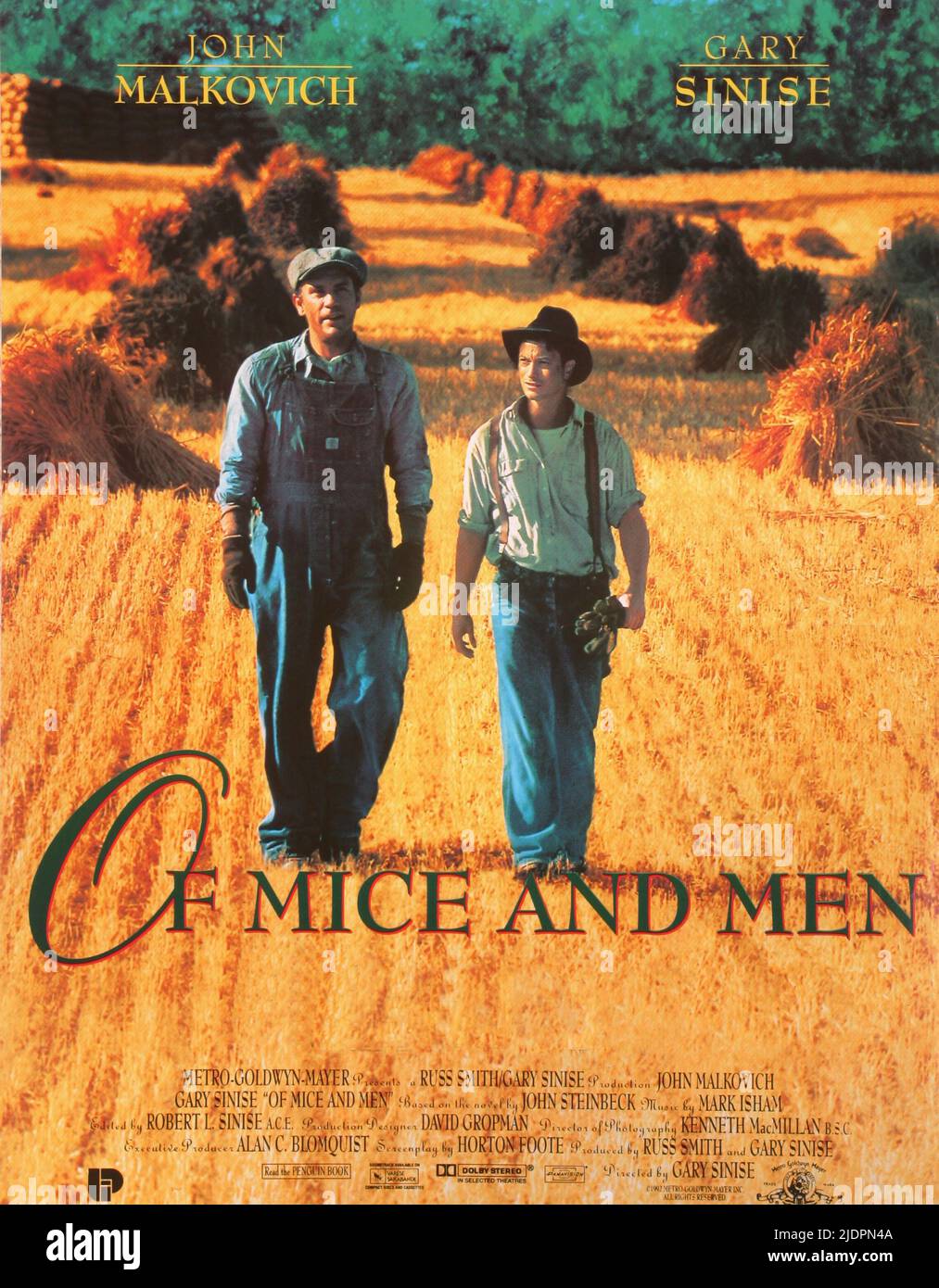
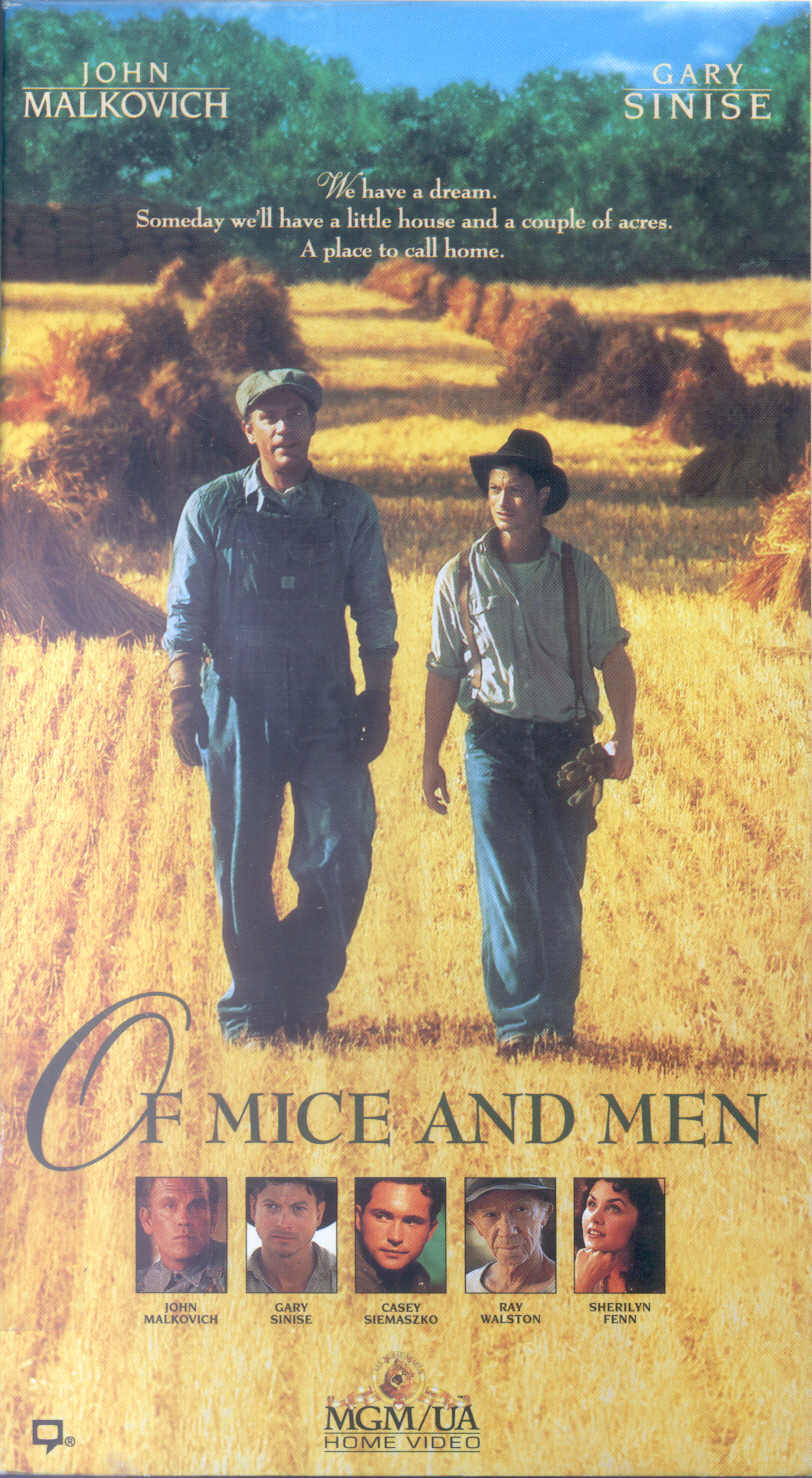
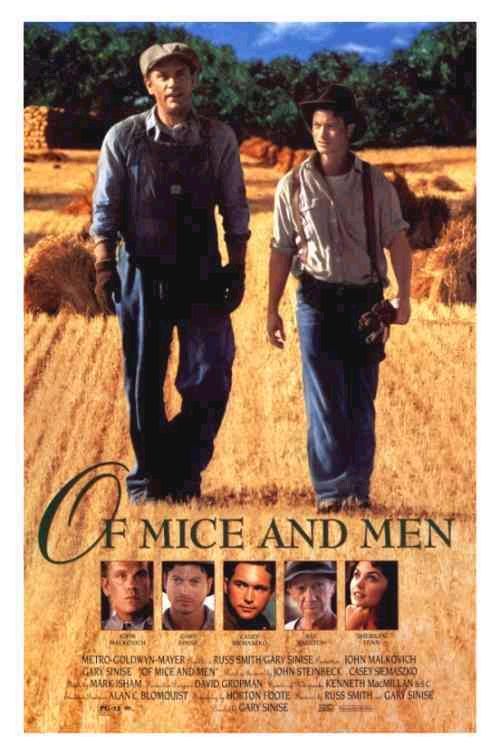
John Steinbeck’s "Of Mice and Males" is a quintessential American tragedy, a poignant story of friendship, loneliness, and the crushing weight of societal expectations. Its enduring energy lies in its exploration of common themes – the fragility of desires, the brutal realities of the Nice Despair, and the complexities of human connection. Whereas quite a few diversifications have graced the stage and display screen, the 1992 tv movie, directed by Gary Sinise and starring Sinise himself as George Milton and John Malkovich as Lennie Small, stands out as a very compelling and trustworthy rendition of Steinbeck’s masterpiece. This adaptation, removed from being a mere retelling, affords a nuanced and emotionally resonant interpretation that solidifies its place as a major contribution to the legacy of the novel.
The 1992 movie efficiently captures the grim fantastic thing about the Salinas Valley setting, a vital ingredient in understanding the characters’ lives and aspirations. The cinematography masterfully makes use of the expansive landscapes of California, contrasting the vastness of the pure world with the confined and sometimes brutal actuality of the migrant staff’ existence. The dusty fields, the stark bunkhouse, and the idyllic, but in the end misleading, tranquility of the riverbank all contribute to the movie’s ambiance of each hope and despair. This visible illustration of the setting is essential; it isn’t merely a backdrop, however an energetic participant within the narrative, mirroring the characters’ inner struggles and highlighting the stark distinction between their desires and their actuality.
Sinise’s route is characterised by a delicate understanding of Steinbeck’s textual content. He avoids sentimentalizing the story, as a substitute choosing a gritty realism that underscores the harshness of the characters’ lives. The performances are uniformly wonderful, however Sinise and Malkovich’s portrayals of George and Lennie are notably noteworthy. Sinise’s George is a posh character, burdened by duty and weary from the fixed wrestle for survival. He is not only a caretaker; he is a person wrestling along with his personal wishes and the restrictions imposed upon him by circumstance and Lennie’s dependence. His portrayal captures the quiet power, the underlying frustration, and the profound unhappiness that lies beneath George’s gruff exterior. The movie does not shrink back from exhibiting George’s inner battle, his moments of exasperation and his final, heartbreaking act of mercy.
Malkovich’s Lennie is equally compelling. He avoids caricature, as a substitute presenting Lennie as a person of immense innocence and childlike marvel, trapped in a physique that’s each highly effective and dangerously unpredictable. Malkovich masterfully conveys Lennie’s light nature, his unwavering loyalty to George, and the terrifying penalties of his unintentional actions. His portrayal just isn’t merely sympathetic; it is deeply human, forcing the viewer to confront the complexities of incapacity and the societal prejudices that Lennie faces. The scenes depicting Lennie’s interactions with Curley’s spouse are notably highly effective, showcasing the tragic misunderstanding and the devastating penalties of his harmless but damaging actions.
The supporting forged additionally delivers sturdy performances, bringing depth and dimension to the ensemble. Ray Walston’s portrayal of Sweet, the ageing ranch hand, is especially transferring. His worry of being discarded and his desperation to cling to the dream of a small farm resonate deeply. The movie efficiently highlights the loneliness and isolation that permeates the lives of all of the characters, emphasizing the determined craving for companionship and belonging that fuels their hopes and desires. The character of Crooks, performed by Charles Cioffi, is especially well-developed, his bitterness and cynicism stemming from the racism and segregation he endures. The movie subtly however successfully underscores the social injustices inherent within the time interval, highlighting the systemic inequalities that contribute to the characters’ plight.
The 1992 adaptation additionally excels in its constancy to Steinbeck’s language. The dialogue is crisp, genuine, and evocative, capturing the vernacular of the time and reflecting the characters’ distinct personalities. The movie does not try to modernize the language or dilute the facility of Steinbeck’s prose. As a substitute, it embraces the simplicity and directness of his writing, permitting the phrases to hold their very own weight and emotional influence. This dedication to the unique textual content is essential, because it preserves the authenticity and emotional depth of Steinbeck’s narrative.
Nevertheless, the movie just isn’t with out its minor shortcomings. Some critics have argued that the pacing may very well be barely improved, notably within the latter half of the movie. Whereas the slower tempo permits for a extra intimate exploration of the characters’ feelings, it would really feel considerably languid to viewers accustomed to a faster-paced narrative fashion. Nonetheless, this minor downside is definitely overshadowed by the movie’s general strengths.
The 1992 adaptation of "Of Mice and Males" is greater than only a trustworthy rendering of the novel; it is a highly effective and transferring cinematic expertise. It efficiently captures the essence of Steinbeck’s story, conveying the themes of friendship, loneliness, and the American Dream with each sensitivity and realism. The performances are distinctive, the route is masterful, and the cinematography is breathtaking. The movie serves as a testomony to the enduring energy of Steinbeck’s narrative and its continued relevance in a world nonetheless grappling with problems with social injustice, financial inequality, and the fragility of the human spirit. It’s a movie that stays with the viewer lengthy after the credit roll, prompting reflection on the complexities of human relationships and the tragic penalties of unmet desires. Its enduring attraction lies in its capacity to resonate with audiences on an emotional degree, reminding us of the significance of compassion, empathy, and the enduring energy of hope, even within the face of overwhelming adversity. It is a highly effective reminder that even within the darkest of occasions, the human spirit, nonetheless fragile, persists. And in that persistence, lies a glimmer of hope, a testomony to the enduring energy of Steinbeck’s timeless story.





Closure
Thus, we hope this text has supplied invaluable insights into A Timeless Tragedy: Revisiting the 1992 Adaptation of "Of Mice and Males". We admire your consideration to our article. See you in our subsequent article!